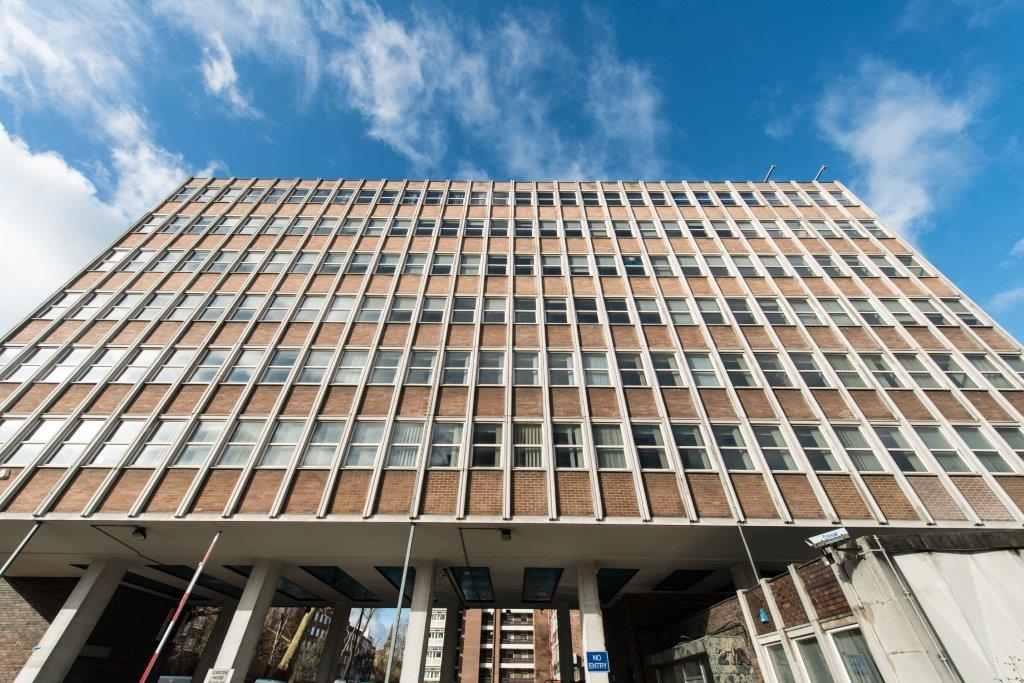
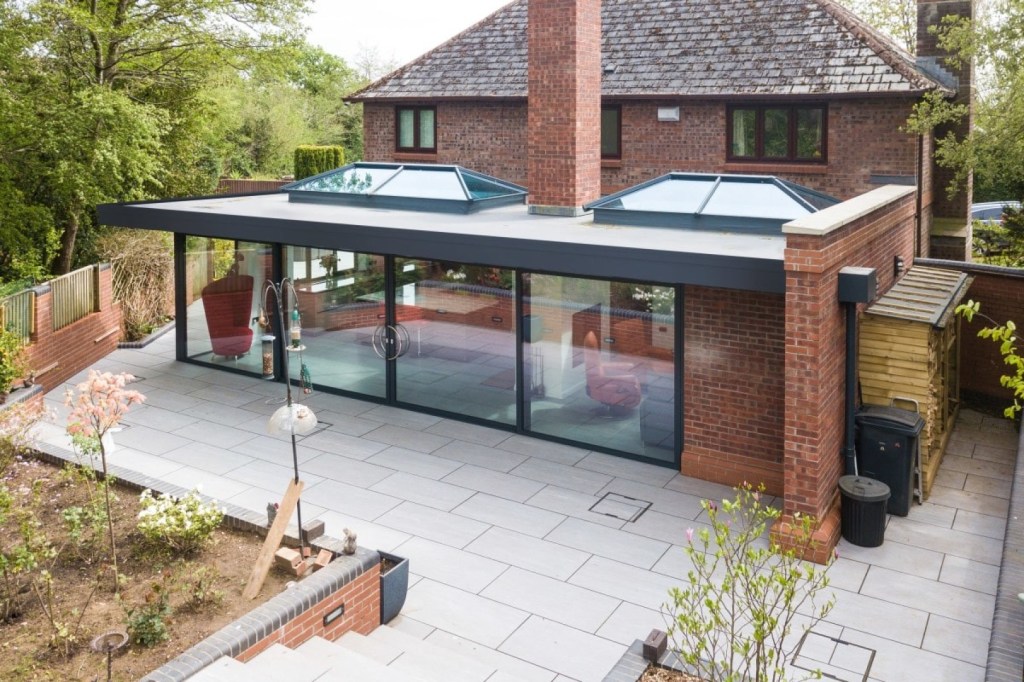
12 things that you can do without planning permission

One of the most common questions we’re asked by homeowners is: “Do I need planning permission for this?”. This article lists 12 projects you can undertake without needing approval from the local planning authority.

In some instances you’ll need planning permission, for example, if you want to build a huge extension or knock down a house and rebuild. But there are many improvements that can be done without permission from your local authority.

There are limitations to these rights, especially if you live in a designated area or a listed building, or if you have already made considerable alterations to your home. It is always advisable to check before starting any work to avoid issues.

It is also important to note that obtaining planning permission is not as complicated or expensive as you may think. So do not compromise on your projects design because you are trying to avoid the planning permission route.

For an extension to your home, we generally, charge £1150 for everything needed to get you planning permission. Our turnaround is 1-2 weeks (most companies are 4 weeks) and we also include the technical specification drawings required for construction. Most importantly, our architects offer an unlimited amendment service free of charge (rather than charging after the first amendment like many others do).

Listed below are smaller home improvements that you’re likely to be able to complete under Permitted Development (PD).

 1. Porch

As long as your new porch conforms with the below criteria, you don’t need planning permission:

  • The ground area does not exceed 3m² (measured externally)
  • No part of the porch can be taller than 3m
  • It cannot be within 2m of any boundary adjacent to a highway

2. Converting a loft

In most areas of the UK, you won’t need planning permission as long as the loft conversion is no higher than the highest part of the roof and a similar material to the rest to the house is used.

Of course any form of loft conversion idea that goes beyond your permitted ceiling space does require permissions, so check before you embark on any ambitious bungalow extension ideas. If you live in a designated area such as a national park or World Heritage Sites you will not be allowed a roof extension.

If you live in a terraced house the conversion can have a volume allowance of 40 cubic metres of additional space. Detached and semi-detached houses can have an extra 10 cubic metres on top of this. However, the roof enlargement can’t hang over the outer wall of the house.

PD also allows for the construction of dormer windows, for additional headroom. But they must not extend forward of the roof plane on the principle elevation, or sit higher than the highest part of the existing roof.

3. Garage Conversions

Converting an attached building, such as an integral garage, into living space falls under PD as you are not increasing the overall footprint of the building. If you’re converting a standalone garage, you will need to apply for a change of use under Building Regulations.

4. Single-storey extension

If you stay with the below parameters, you can build a single-story extension without planning consent:

  • You can extend a detached property by 8m to the rear if it’s a single-storey extension (6m for a semi or terraced house), or by 3m if it’s double
  • A single-storey extension can’t be higher than 4m on the ridge and the eaves, and ridge heights of any extension can’t be higher than the existing property
  • Two-storey extensions must not be closer than 7m to the rear boundary
  • Side extensions can only be single storey with a maximum height of 4m and a width no more than half of the original building
  • Any new extension must be built in the same or similar material to the existing dwelling
  • Extensions must not go forward of the building line of the original dwelling
  • In designated areas (such as areas of outstanding natural beauty, conservation areas, etc), side extensions require planning permission and all rear extensions must be single storey
  • An extension must not result in more than half the garden being covered.

5. Conservatory

Similar to single storey extensions, conservatories and orangeries can be added under PD, following the same restrictions.

6. Two-storey extension

Under PD, you can add a two-storey extension to your home, as long as it is at the rear of the dwelling. In addition, it must not exceed 3m in depth or be within 7m of the rear boundary.

7. Cladding

Cladding will usually fall under PD, but is not permitted under PD on any dwelling house located on Article 1(5) land which includes special areas such as a National Park, AONB, World Heritage Site or Conservation Area.

8. Solar panels

Solar panels can be added under PD. Just ensure they do not protrude more than 200mm beyond the place of the wall or roof, and the highest part of the panel isn’t higher than the highest part of the roof (excluding chimney).

Free-standing panels can also be developed, but are limited in size.

If you are in a Conservation Area or listed building then limitations will apply.

9. Basement

Basements may be PD under Class A of the General Permitted Development Order (GPDO). However, PD does not allow for engineering works.

10. Parking spaces

If you need to drop your curb then you will need consent from the local planning authorityParking areas are permitted under PD providing that:

  • Any hard surface situated between the principle elevation of a dwelling and the highway, or any surface which exceeds 5m², is made of porous materials
  • Provisions are made to direct run-off water from the surface within the property curtilage and not onto the highway

11. Swimming Pool

You can build a swimming pool within your garden, provided that the total area covered by the pool does not exceed 50% of the area of the garden curtilage.

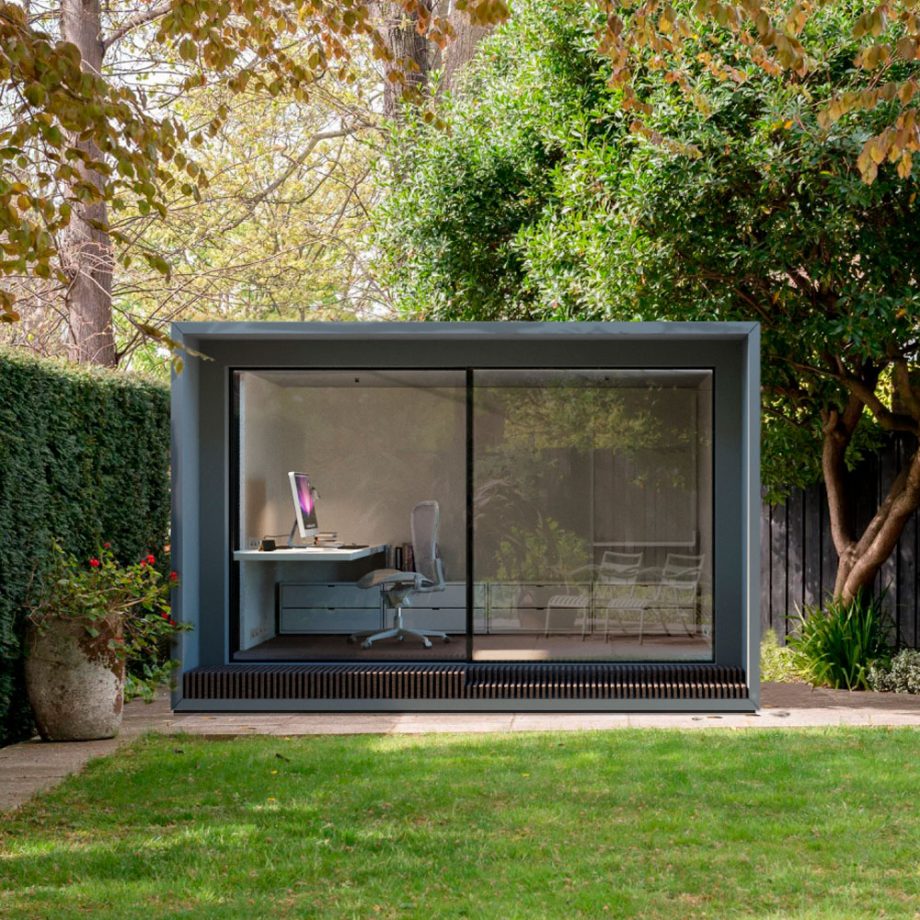
12. Shed or outbuilding

Providing the total area covered by multiple outbuildings does not exceed 50% of the total area of the curtilage, these may be built under PD. This 50% should take into account any extensions, but not the area covered by the main house. Here are some restrictions:

  • Outbuildings cannot sit forward of the principle elevation
  • Outbuildings can only be single storey, with the maximum eaves height remaining at 2.5m
  • There are height restrictions depending on the type of roof
  • Outbuildings under PD cannot be used for residential accommodation, but can be used to work from home
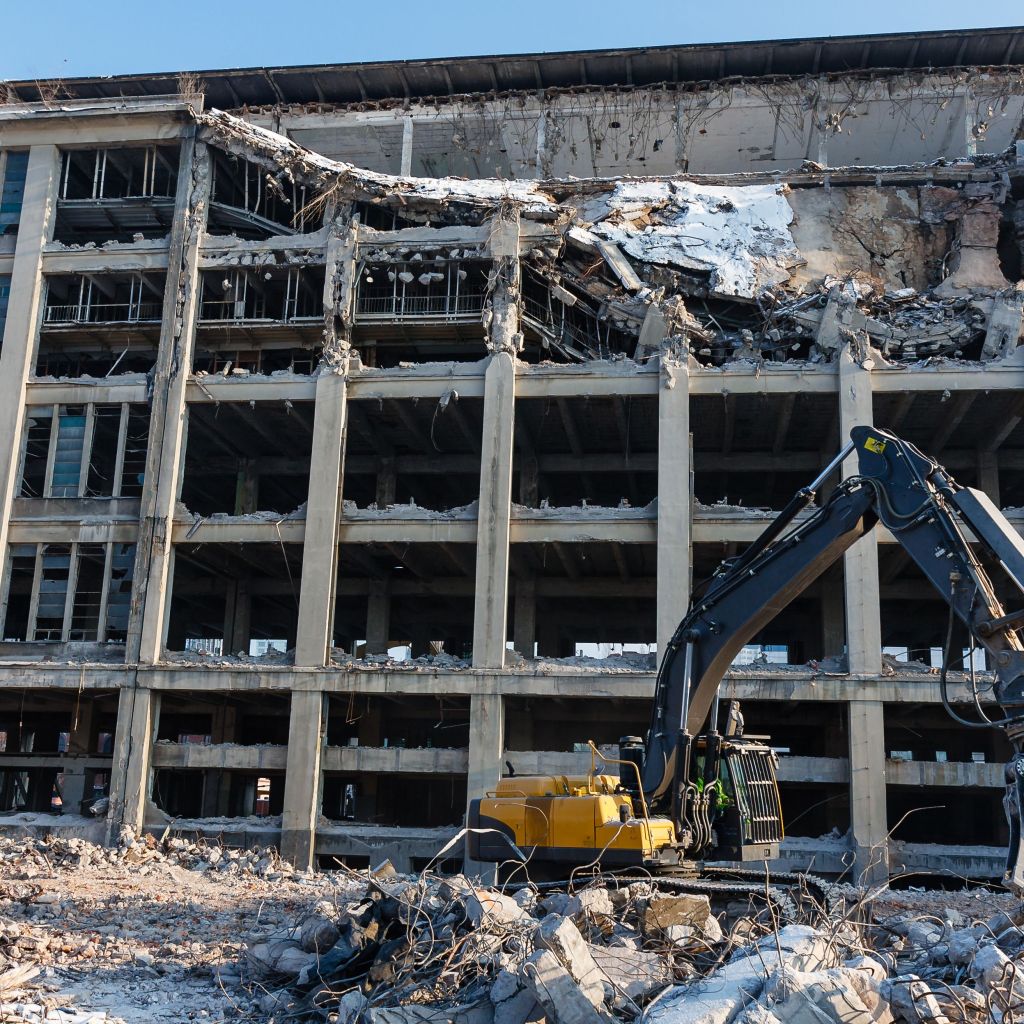
You may be able to demolish your commercial site or flats and replace with new residential dwellings or flats without planning permission

A new Permitted Development Right (PDR) was introduced in August 2020, which permits the demolition of certain commercial buildings and residential dwellings to create new dwellings. This is known as Class ZA and is another attempt by the Government to increase the supply of housing through the redevelopment of vacant land and underused buildings.

When you buy a site it can sometimes be tempting to demolish the building as soon as possible to speed things up. Our advice is to hold fire. Always speak to a specialise before you decide to demolish. You may be able to save a lot of time and money by utilising Class ZA.

What is Class ZA?

Class ZA allows for the demolition of either a single purpose built detached block of flats or a single detached building that is an office or light industrial that was existing on 12th March 2020. Class ZA allows for a replacement with either a single propose built block of new flats or a single purpose built house.

Class ZA also permits the replacement building to be up to two storeys higher than the existing building – potentially doubling the value of you scheme.

Criteria and Prior Approval

There is of course, a list of qualifying criteria which include; the requirement that the existing building needs to have been vacant for more than 6 months, the replacement building needs to be on the same footprint, and several others.

There are also prior approval matters that need to be addressed. These include the impact on:

  • highways
  • contamination
  • flooding risks
  • noise
  • natural light
  • design and external appearance of the new build

However, unlike Class Q (agricultural to residential) the new Class ZA includes consideration of:

  • ‘impact on business’
  • impact on heritage and archaeology
  • landscaping

There is also a requirement to provide details of the method of demolition and then, following approval, there is a need to provide details of the construction management of the development including some listed elements.

This PDR excludes sites in Areas or Outstanding Natural Beauty, Conservation Areas, or Listed Buildings.

Contact us

For specialist advice on whether you can utilise Class ZA contact a member of our team on 07463136687 or email hestia.planning@outlook.com

Can I extend upwards on my block of flats?

The residential sector has been struggling for a while.  Supply and demand for land and living is becoming more and more challenging meaning that the Government are coming up with new ways in an attempt to resolve the problem.  

On the 1st August 2020, a new Permitted Development Right (PDR) came into effect which attempted to relieve the housing demand pressure. This PDR is know as ‘airspace rights’ and falls under Part 20, Class A of The Town and Country Planning (Permitted Development and Miscellaneous Amendments) (England) (Coronavirus) Regulations 2020.

What are Class A ‘airspace rights’?

Class A airspace rights allow the construction of up to two additional storeys of flats immediately above the existing topmost residential storey on a building which is an existing purpose-built, detached block of flats. This is subject to a prior approval process, details of which need to comply with the regulations.

What is not permitted?

As with most PDR’s, such developments remain, subject to a number of approvals and there are exceptions.

1) The existing building cannot be in residential use as a result of a previous Permitted Development change of use.

2) The existing building cannot be less than 3-storeys in height.

3) The building is exempt if constructed before 1st July 1948 or after 5th March 2018.

4) Floor to ceiling heights of additional storeys cannot exceed 3 metres or the height of an existing storey.

5) The extended building cannot exceed 30 metres in height.

6) The overall height of the roof of the extended building cannot be greater than 7 metres higher than the highest part of the existing roof (not including existing plant).

7) Works cannot take place outside the existing curtilage of the building.

8) The building cannot lies within a Conservation Area, AONB, a National Park, the Broads, a site of special scientific interest, a listed building or land within its curtilage, a safety hazard area, a military explosives area, or land within 3km of the perimeter of an aerodrome.

Contact us

We’d urge any developer or landlord to speak to a specialist before investing too heavily – airspace developments are complex when it comes to legal issues and there are many factors to consider.

FIND OUT IF YOUR BUILDING MAY BE SUITABLE FOR AIRSPACE DEVELOPMENT BY CONTACTING OUR SPECIALIST TEAM ON 07463136687

Can I extend my house?

Adding an extension to your house can add value and create much needed space. In most cases, having an extension or addition to the house is classed as a “permitted development,” so it wouldn’t require planning permission (a prior-notification form may be required).

Read on to see when you may need planning permission. While the below list is not exhaustive, you should always seek the guidance of a planning consultant or planning officer in your local authority.

When is Planning Permission required?

Your project will not fall under permitted development and will require planning consent if the following applies:

  • The size of the extension is more than half the area of land around the “original house”. 
  • The extension is taller than the tallest or highest part of the roof. 
  • If it is a single-storey rear extension, it extends beyond the rear wall of the house by more than three metres in a semi-detached house, or by four metres in a detached house.
  • The maximum height of a single-storey rear extension will be more than four metres.
  • If an extension of more than one storey extends beyond the rear wall of the house by over three metres. 
  • The maximum eaves and ridge height of the extension will be higher than the existing house.
  • If you want to use different materials, i.e. looks different in appearance to the existing house. 

How we can help

If you are looking to extend your property then it is vital to consult the experts to assess whether you need planning permission. 

Contact us and we can help with all the matters for you extension

How far can I extend without Planning Permission?

You can build an extension without planning permission up to six metres (or eight metres if your house is detached). But it is worth considering the following before extending the property:

Property type:

If you live in a flat, maisonette, or another type of building, you do not have permitted development rights. This means you cannot build an extension without full planning permission. And if your property has undergone a change of use or was converted into a house, permitted development rights may not be allowed.

Has the property already been extended?

If the property has been extended after 1948 then you may need planning permission or your permitted development allowance will have been reduced.

Is your property Listed or on Designated Land?

If it is in a ‘protected’ area, such as a conservation area, national park, or areas of outstanding natural beauty, the permitted development rights might even have been removed. But even if the rights have been restricted rather than removed, this means you cannot build more than one storey, build a side extension, or clad the exterior.