Prior Notification
What is Prior Notification?
Certain developments are considered Permitted Development and therefore do not require planning consent, however, some of these required notifying the Local Planning Authority (LPA) in order to determine whether ‘prior approval’ is required.
The prior notification procedure is the requirement for developers to notify the council to determine whether prior approval is or isn’t required.
The risks and impacts of the proposals will vary depending upon the location, context and current/ existing/ proposed use with factors such as design, appearance, transport and highways impacts and flooding risks considered by the LPA.
The prior notification route is supposed to be generally straightforward, with local planning authorities making prompt decisions, however, this is not always the case, particularly with recent changes to legislation.
Types of development that may require prior approval are:
Larger Home Extensions – Under the conditions set by permitted development legislation, householders can build larger single-storey rear extensions in certain circumstances (see also ‘Class AA: Additional Storeys’ below for more information on extending upwards) .
Change of use – Some changes from one Use Class to another require prior approval (also see Class MA below). New planning legislation in relation to change of use to residential under Permitted Development means that the procedure is more complex than ever.
Construction of new flats in air apace – these are made up of six different classes:
Class ZA allows for the demolition of a single detached building in existence on 12 March 2020 that was used for office, research and development or industrial processes, or a free-standing purpose-built block of flats, and its replacement by an individual detached block of flats or a single detached house within the footprint of the old building, with up to two additional storeys in the airspace.
Class A permits allows the construction of up to two additional storeys of new flats in the airspace above a purpose-built detached block of flats.
Class AA permits construction of up to two new storeys of flats in the airspace above detached buildings in commercial or mixed use, including where there is an element of residential use.
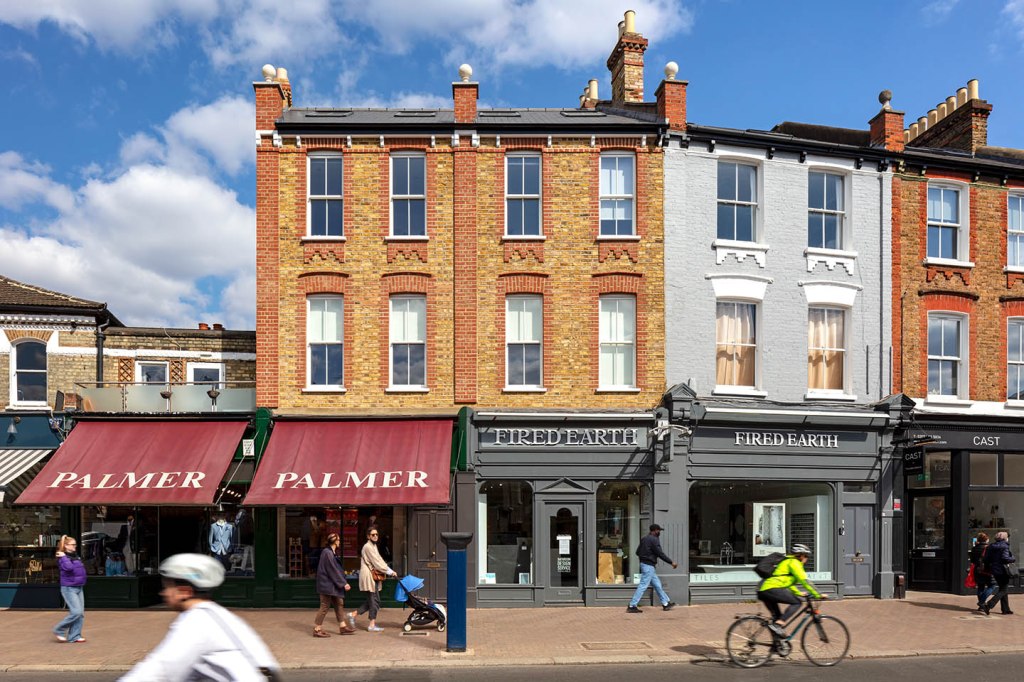
Class AB permits the construction of new flats in the airspace above terrace buildings (including semi-detached buildings) in commercial or mixed (including residential) use; two storeys may be added if the existing building is two or more storeys tall, or one additional storey where the building consists of one storey.
Class AC permits the construction of new flats in the airspace above terrace dwellinghouses (including semi-detached houses); two storeys may be added if the existing building is two or more storeys tall, or one additional storey where the building consists of one storey.
Class AD permits the construction of new flats in the airspace above detached dwellinghouses; two storeys may be added if the existing building is two or more storeys tall, or one additional storey where the building consists of one storey.

Agricultural or Forestry developments – Anyone intending to build or significantly alter/extend a farm or agricultural building or structure is required to notify the planning authority of their intention to carry out such development. Also anyone wanting to form or alter a private way or carry out excavation or engineering operations in relation to a farm or agricultural undertaking must also notify the planning authority in advance.

Demolition – Prior approval may be required to demolish a building; it depends on a number of factors including the type and size of building and where it is located. Contact us for advice to find out what is required for the demolition you have in mind before any work commences to avoid the risk of legal action being taken against you (also see Class ZA below).
Developments for electronic communications networks – certain forms of development by or on behalf of an electronic communications code operator for the purpose of the electronic communicators network are subject to ‘prior notification’. The LPA can only consider the siting and appearance of the proposal.
It is essential to provide the relevant information to support application. Hestia Planning can provide invaluable advice and assistance to give the prior notification application the best chance of success.
Read below for some common examples of ‘prior notifications’ that we work on.
Class MA
From 1 August 2021 new permitted development rights (Class MA) will take effect, granting deemed planning permission for a change of use from commercial to residential. These will replace existing retail, warehouse and office to residential rights with rights applying to all of the relatively recent Use Class E in which those uses now sit.
Class MA permitted development is subject to the following qualifications:
- an upper size limit of 1,500 square metres of floor space changing use;
- applicable only to buildings that have been in Commercial, Business and Service (Use Class E) uses for two years (including time in former uses now within that class);
- applicable only to buildings that have been vacant for at least three continuous months;
- applicable in conservation areas, but not in other Article 2 (3) land such as National Parks and Areas of Outstanding Natural Beauty;
- subject to prior approval by the local planning authority on specific planning matters (more on this below);
- attract a fee of £100 per dwellinghouse.
There are prior approval rules limiting those areas where a council can object to the change on.
For Class MA development these grounds are:
- the transport impacts of the development, particularly to ensure safe site access;
- any environmental contamination risk;
- any flooding risks;
- the impacts of noise from commercial premises on the intended occupiers of the development;
- the provision of adequate natural light in all habitable rooms; and
- the impact on intended occupiers of the development of the introduction of residential use in an area the authority considers to be important for general or heavy industry, waste management, storage and distribution, or a mix of such uses.
In addition to the above requirements, the following three matters also apply although only in more limited circumstances:
- the impact on intended occupiers of the development of the introduction of residential use in an area the local planning authority considers to be important for general or heavy industry, waste management, storage and distribution, or a mix of such uses;
- Where the building is located in a conservation area, and the development involves a change of use of the whole or part of the ground floor, the impact of that change of use on the character or sustainability of the conservation area; and
- Where the development involves the loss of services provided by a registered nursery, or health centre the impact on the local provision of the type of services lost.
Our Service
For £450 our planning specialists can conduct a full site appraisal to ensure your site meets all of the above requirements and give you confidence that your site falls under Permitted Development Rights. We offer an additional service where we can prepare all material and submit your application.
Please contact us to talk about how we can provide an assessment to determine whether your site meets these requirements.
I was considering purchasing a site with the intention of making use of Class ZA rights. I wanted reassurance that there was a high chance these would be given before committing to the purchase. Hestia Planning understood the urgency of my request and quickly produced an assessment of the site. It turned out that the site had been built in the early 2000’s and I wasn’t able to demolish it for flats. Had I bought the site, I could have been seriously out of pocket – the service was worth every penny!
Mr Davenport
Class ZA – Demolition of buildings & construction of new flats or a house
Class ZA allows for the demolition of either a single purpose built detached block of flats or a single detached building within B1 Use Class that was existing on 12th March 2020 and it’s replacement with either a single propose built block of new flats or a single purpose built house with up to 2 additional storeys for the new structure in the airspace. B1 includes offices and light industrial.
The new class allows for the demolition and construction of the new building including a basement or cellar. Importantly the footprint of the existing building must not exceed 1,000m², you cannot demolish part of a building or more than one building.
The maximum height of the old building including radio masts and antennae is 18m. The building must have been constructed on or before 31st December 1989.
The new building can have as many storeys as the old building plus two new ones in the airspace as long as the overall height is not increased by more than 7m or a maximum of 18m overall.
Our Service
For £450 our planning specialists can conduct a full site appraisal to ensure your site meets all of the above requirements and give you confidence that your site falls under Permitted Development Rights. We offer an additional service where we can prepare all material and submit your application.
Please contact us to talk about how we can provide an assessment to determine whether your site meets these requirements.
Class AA – enlargement of a dwellinghouse by construction of additional storeys
You may be able to add additional storeys to your home by one or two additional storeys.
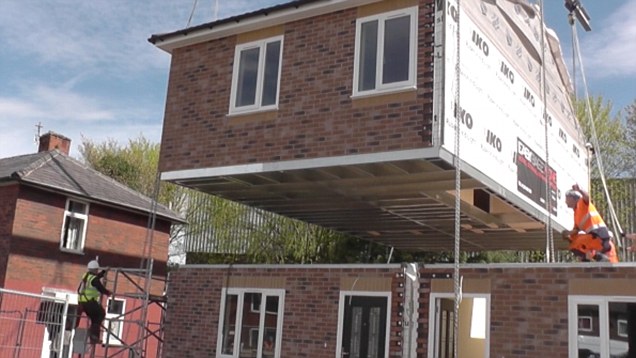
You may add up to two additional storeys where the existing house consists of two or more storeys or one additional storey where the property consists of one single storey or a bungalow.
A ‘prior notification’ will be required to be submitted to the LPA for the additional storeys who will consider several elements. This includes the impact on any adjoining property including overlooking, privacy and the loss of light. The design of the property on the principal elevation and that of any side fronting a highway. if you are in a zone that might affect air traffic then this will be a consideration and finally whether the new storeys would affect a protected view. You will also need to inform the local authority how you will mitigate against disturbance to the neighbours and the hours of any construction.
As with other Permitted Development Rights, there are restrictions and certain rules that must be complied with before you submit your ‘prior notification’. If you would like to know whether your house benefits from these rights then please contact us to talk about how we can help.
Please contact us for friendly advice. Initial consultation is always free with no obligation.
 Hestia Town Planning