Permitted Development
What is Permitted Development?
Permitted Development Rights (PDRs) are rights to make certain changes to a building without the need to apply for planning permission. They derive from a general planning permission granted by Parliament, rather than from permission granted by the Local Planning Authority (LPA).
Before some PDRs can be used, the developer must first obtain “prior approval” in relation to specified aspects of the development from the LPA. These are discussed more in more detail in the prior notification page.
Some PDRs cover building operations, such as home extensions, agriculture, caravan sites transport or renewable energy, whereas others cover change of use of buildings.

The intention of permitted development is so that householders can avoid the more complex process of applying for ‘full’ planning permission. However, what is allowed under permitted development is a complicated process. Some Councils seek to resist permitted development by very strict interpretations of the rules and this can lead to enforcement action. Additional restrictions on permitted development may arise if the project is in a Conservation Areas, or in Green Belt, or related to a Listed Building.
How we can help
We have many years of experience in advising on permitted development, and our experts keep up to date with the frequent of amendments to the rules as issued by government.
To assist you Hestia Planning offers a service to find out whether your proposal would benefit from permitted development rights, or whether planning permission would be required. If your project is not covered under permitted development, then Hestia Planning will advise you on modification needed, or alternatively assist you with a planning application.
Usually an informative letter is sufficient for most people’s needs, however if a more formal decision is required then Hestia Planning will apply for a Certificate of Lawfulness.
"I was in the final stages of selling my house when a search came back to advise that my extension did not have planning permission. My buyers were going to pull out and it was a really stressful time. Not only did Hestia Planning get a certificate showing that the works were allowed, but they also liaised with my buyers to put their minds at ease too. They kept us all informed about the application process and the sale went through as planned". Miss F.
What is a Certificate of Lawfulness?
In order that you can gain certainty that your extension or other PD project is free from future enforcement, it is worth considering an application for a ‘Certificate of Lawfulness’. This is also known as a ‘Certificate of Lawful Existing Use or Development’(CLEUD), and it can be applied for either before or after the construction has taken place.
When is a Certificate of Lawfulness required?
There are a couple of reasons that you might need to apply for a Certificate of Lawful Existing Use or Development. The most common reasons are:
- If planning enforcement action is threatened by a local council and you think the time for action has passed (as per the below timescales)
- If you are planning on selling or mortgaging your property and planning permission was never granted and you need to show a prospective buyer that no enforcement action can be taken.
If either of these apply then you might want to formalise the development with a Certificate of Lawfulness application.
Planning Permission was Never Granted
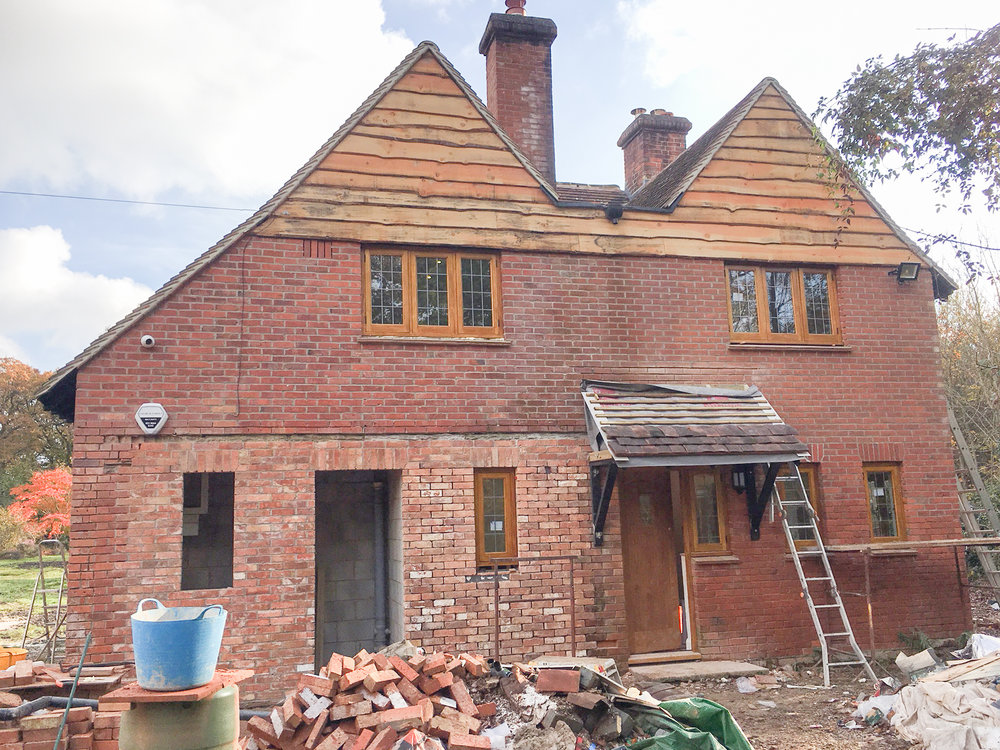
Firstly, don’t panic. This happens more often than you think. If you find yourself in a position where you have building works or have changed the use of a building without obtaining planning consent then you will either need to apply for retrospective planning permission or a Certificate of Lawfulness
Timescales
In most cases an authorised development becomes immune from enforcement action if no action is taken:
• Within 4 years of substantial completion for a breach of control consisting of operational development, i.e. building works;
• Within 4 years for an authorised change of use to a single dwelling;
• Within 10 years for any other breach of planning control (essentially other change of use).
If a development has been carried out in excess of the above timeframes anyone can apply for a Certificate of Lawfulness which seeks to prove that the development or use has existed for the required period of time.
There is another option if you’ve carried out works but have not exceeded the ‘immunity’ timescales above, retrospective planning permission can be applied for. See our dedicated planning applications page for more information.
"I was approached by my Local Authority and told that my front garden wall had never received planning permission. I was very anxious. Hestia Planning helped me pull together all the required evidence to show that the wall had been built for over 4 years' and they applied for a Certificate of Lawfulness to show that I did not need planning permission". Mrs Leigh
If you would like advice on obtaining a Certificate of Lawful Use or want to start applying for a certificate of lawful development, please call us on 07463136687 or email hestia.planning@ outlook.com to find out what can be done under these regulations.
 Hestia Town Planning