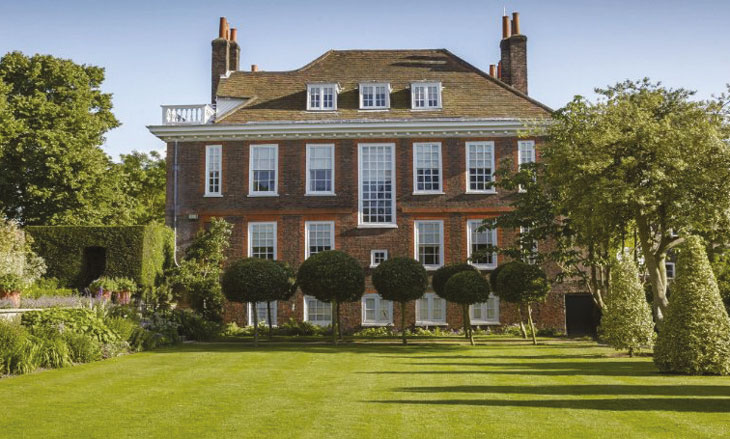
How to change the use of a listed building

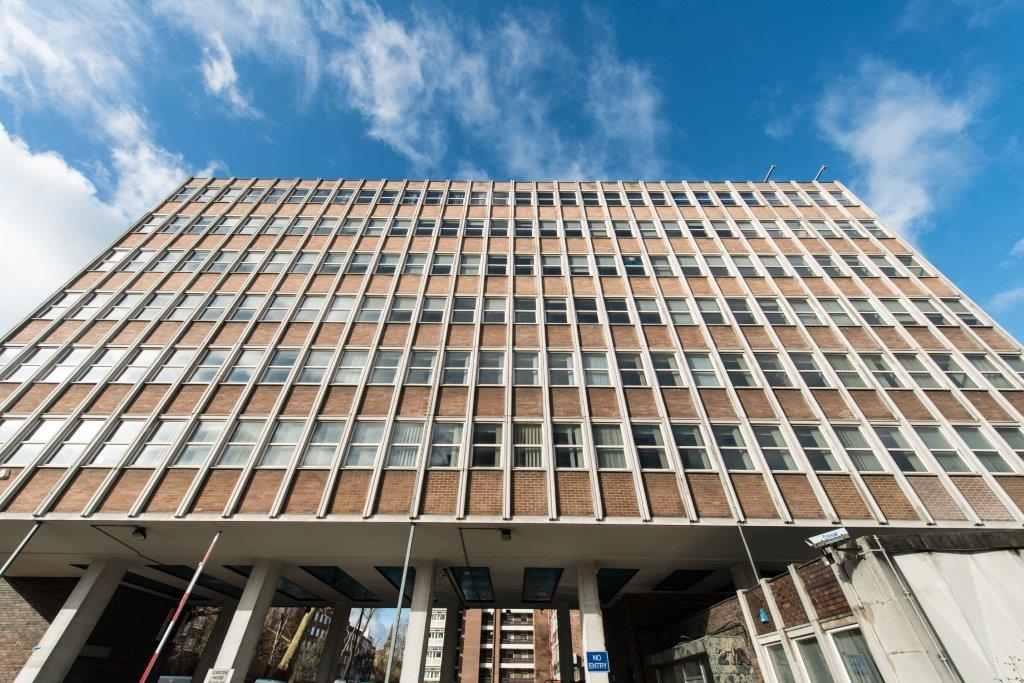
This week, Hestia Town Planning secured Planning and Listed Building Consent for a change of use from Grade II Listed offices (B1) to a House in Multiple Occupation (HMO) (Sui-Generis) in a conservation area. Usually, the conversion of offices to residential is a relatively straightforward process. However, when changing the use of a listed building, it is a whole other ballgame.

If you have a listed building and are considering changing its use, then please get in touch to discuss your proposals with a specialist consultant.

What is a Listed Building?

Listing marks and celebrates a building’s special architectural and historic interest, and also brings it under the consideration of the planning system, so that it can be protected for future generations.

Due to the importance of listed buildings, it mean there will be extra control over what changes can be made to a building’s interior and exterior. Owners will need to apply for Planning Permission with Listed Building Consent for new buildings, major alterations to existing buildings and to change the use of listed buildings or land.

How do I find out if a property is listed?

The National Heritage List for England (NHLE) contains details of all listed buildings in England. To find out if a property is listed just search The List.

Heritage Assessment

In every case, the Local Planning Authority will want to see some form of heritage assessment. Heritage impact assessment is a structured process to make sure that you take the significance of your historic asset into account when you are developing and designing proposals for change.

For this particular case, we were required to conduct a site visit and produce a full, detailed heritage assessment.

When we are dealing wth a listed building, it is important to note that we are dealing with the whole building, not just the façade or some other obvious heritage feature. If it is a listed building, there is a host of things that might be covered: hidden elements such as floor joists or internal fabric for instance, which may not be regarded as important.

Something that is often overlooked, is the importance of the buildings layout. The layout of a historic building is valuable because it tells the history of how the building was used when first built, and how it might have changed over time. There is a misconception, that providing the external elements remain intact and and obvious historical internal elements, that the internal layout of a building can be altered. This is not always the case.

In this instance, the many rooms that made up the offices for the current B1 Use Class were perfect to accommodate rooms required for a HMO (with some clever designing). We were able to negotiate some very minor internal changes on the basis that upon removal of the internal fabric, a Conservation specialist was present to record and document any finds.

Given that the offices had been vacant for some time and that there was a strong need for single occupancy in the area. We were able to make a strong case that a HMO would be the optimum viable use of the site.

10 Steps to achieving planning permission

Once you have your design, the next stage is often to apply for planning permission via your Local Planning Authority. Read on, to find out more about your planning application and how Hestia Town Planning can help.

1. Do you have Permitted Development Rights?

These have increased considerably in recent years can now be undertaken in many cases without requiring planning permission. Always consult a professional before undertaking works that you believe to be Permitted Development.

2. Early Involvement

Local Planning Authorities periodically review their Local Development Plans and will always invite comments from members of the public. This is your opportunity to promote land for development. Check your Local Planning Authorities ‘Planning Policy’ webpage to see where they are with the production of their Local Plan.

3. Engage with your Local Planning Authority

A duty Planning Officer is available during working hours to offer general advice. Alternatively you may want to have a pre-application meeting to discuss your scheme in more detail. A pre-application meeting is not compulsory and with the help of a planning professional, this stage can sometimes be bypassed to speed up the application process – some Local Authorities currently have a waiting list of a 9 months!

4. Talk to an expert

An expert may suggest other options which suit your requirements and are likely to have a smoother passage through the planning process.

5. Research

Check your Local Planning Authorities planning database to see if similar proposals been accepted in the area before.

6. Check your sites history

Check whether the site/property already has a planning history. Even if a scheme was not previously approved, changes in law mean that the scheme may now be viewed favourably, so it is always important to check the laws or seek advise from a planning specialist.

7. Consult

Whilst not always compulsory for smaller schemes, it is advisable to discuss your plans with neighbours and members of the local community. For larger schemes, the Local Planning Authority will want to see how you have engaged and shaped your plans with the input of the local community.

8. Negotiate and Compromise

You may need to compromise slightly on your original proposal or offer additional benefits that will arise as a result of your development in order to tip the planning balance. A good planning officer will always advise you what changes you can make, to ensure your application is successful.

9. Try again

If your first application is unsuccessful you are entitled to a ‘free go’. Contact Hestia Town Planning for some advice to make sure your proposal will be successful the second time around. 

10. Appeal

Don’t give up! You have the right to appeal the decision and have the application determined by a Planning Inspector who is not local to the area.

Contact a planning specialist on 07463136687 or hestia.planning@outlook.com

12 things that you can do without planning permission

One of the most common questions we’re asked by homeowners is: “Do I need planning permission for this?”. This article lists 12 projects you can undertake without needing approval from the local planning authority.

In some instances you’ll need planning permission, for example, if you want to build a huge extension or knock down a house and rebuild. But there are many improvements that can be done without permission from your local authority.

There are limitations to these rights, especially if you live in a designated area or a listed building, or if you have already made considerable alterations to your home. It is always advisable to check before starting any work to avoid issues.

It is also important to note that obtaining planning permission is not as complicated or expensive as you may think. So do not compromise on your projects design because you are trying to avoid the planning permission route.

For an extension to your home, we generally, charge £1150 for everything needed to get you planning permission. Our turnaround is 1-2 weeks (most companies are 4 weeks) and we also include the technical specification drawings required for construction. Most importantly, our architects offer an unlimited amendment service free of charge (rather than charging after the first amendment like many others do).

Listed below are smaller home improvements that you’re likely to be able to complete under Permitted Development (PD).

 1. Porch

As long as your new porch conforms with the below criteria, you don’t need planning permission:

  • The ground area does not exceed 3m² (measured externally)
  • No part of the porch can be taller than 3m
  • It cannot be within 2m of any boundary adjacent to a highway

2. Converting a loft

In most areas of the UK, you won’t need planning permission as long as the loft conversion is no higher than the highest part of the roof and a similar material to the rest to the house is used.

Of course any form of loft conversion idea that goes beyond your permitted ceiling space does require permissions, so check before you embark on any ambitious bungalow extension ideas. If you live in a designated area such as a national park or World Heritage Sites you will not be allowed a roof extension.

If you live in a terraced house the conversion can have a volume allowance of 40 cubic metres of additional space. Detached and semi-detached houses can have an extra 10 cubic metres on top of this. However, the roof enlargement can’t hang over the outer wall of the house.

PD also allows for the construction of dormer windows, for additional headroom. But they must not extend forward of the roof plane on the principle elevation, or sit higher than the highest part of the existing roof.

3. Garage Conversions

Converting an attached building, such as an integral garage, into living space falls under PD as you are not increasing the overall footprint of the building. If you’re converting a standalone garage, you will need to apply for a change of use under Building Regulations.

4. Single-storey extension

If you stay with the below parameters, you can build a single-story extension without planning consent:

  • You can extend a detached property by 8m to the rear if it’s a single-storey extension (6m for a semi or terraced house), or by 3m if it’s double
  • A single-storey extension can’t be higher than 4m on the ridge and the eaves, and ridge heights of any extension can’t be higher than the existing property
  • Two-storey extensions must not be closer than 7m to the rear boundary
  • Side extensions can only be single storey with a maximum height of 4m and a width no more than half of the original building
  • Any new extension must be built in the same or similar material to the existing dwelling
  • Extensions must not go forward of the building line of the original dwelling
  • In designated areas (such as areas of outstanding natural beauty, conservation areas, etc), side extensions require planning permission and all rear extensions must be single storey
  • An extension must not result in more than half the garden being covered.

5. Conservatory

Similar to single storey extensions, conservatories and orangeries can be added under PD, following the same restrictions.

6. Two-storey extension

Under PD, you can add a two-storey extension to your home, as long as it is at the rear of the dwelling. In addition, it must not exceed 3m in depth or be within 7m of the rear boundary.

7. Cladding

Cladding will usually fall under PD, but is not permitted under PD on any dwelling house located on Article 1(5) land which includes special areas such as a National Park, AONB, World Heritage Site or Conservation Area.

8. Solar panels

Solar panels can be added under PD. Just ensure they do not protrude more than 200mm beyond the place of the wall or roof, and the highest part of the panel isn’t higher than the highest part of the roof (excluding chimney).

Free-standing panels can also be developed, but are limited in size.

If you are in a Conservation Area or listed building then limitations will apply.

9. Basement

Basements may be PD under Class A of the General Permitted Development Order (GPDO). However, PD does not allow for engineering works.

10. Parking spaces

If you need to drop your curb then you will need consent from the local planning authorityParking areas are permitted under PD providing that:

  • Any hard surface situated between the principle elevation of a dwelling and the highway, or any surface which exceeds 5m², is made of porous materials
  • Provisions are made to direct run-off water from the surface within the property curtilage and not onto the highway

11. Swimming Pool

You can build a swimming pool within your garden, provided that the total area covered by the pool does not exceed 50% of the area of the garden curtilage.

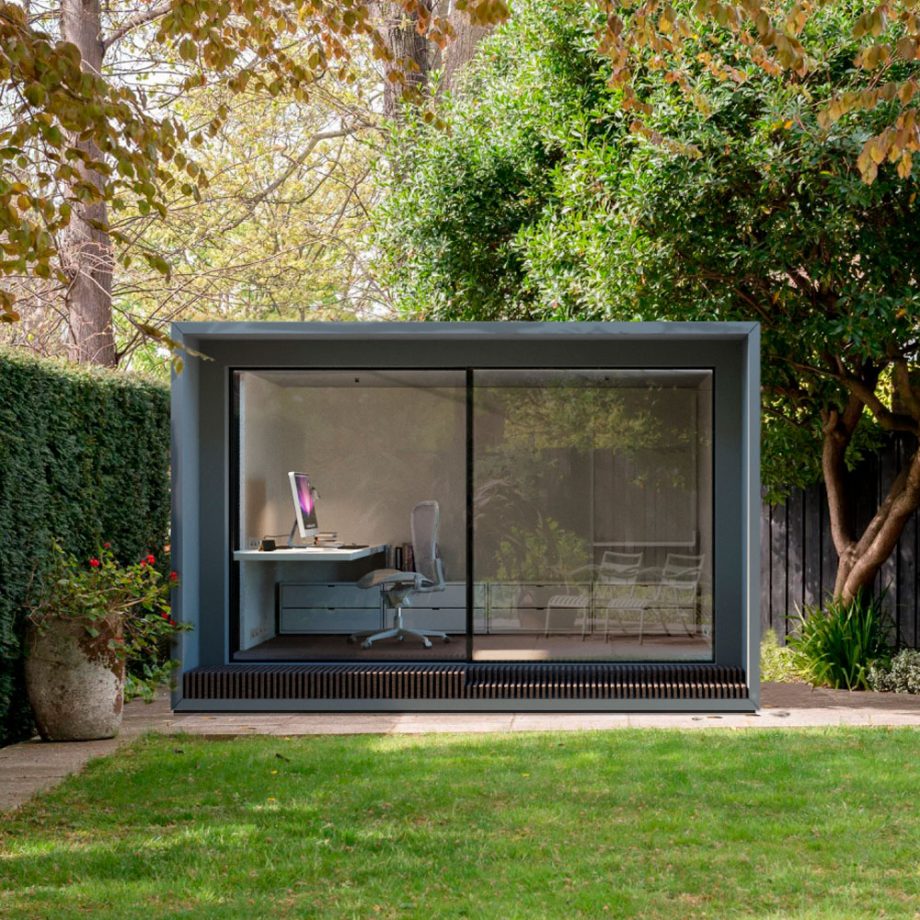
12. Shed or outbuilding

Providing the total area covered by multiple outbuildings does not exceed 50% of the total area of the curtilage, these may be built under PD. This 50% should take into account any extensions, but not the area covered by the main house. Here are some restrictions:

  • Outbuildings cannot sit forward of the principle elevation
  • Outbuildings can only be single storey, with the maximum eaves height remaining at 2.5m
  • There are height restrictions depending on the type of roof
  • Outbuildings under PD cannot be used for residential accommodation, but can be used to work from home
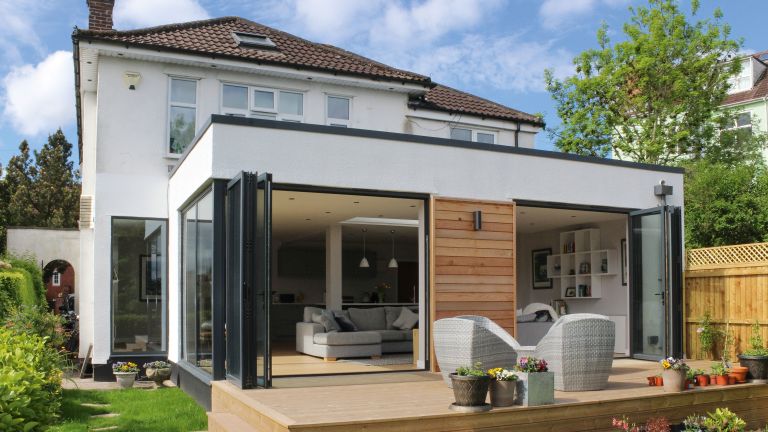
Do I require planning permission to extend my home?

Getting planning permission for an extension is not as complicated and daunting as it might first appear. With Permitted Development Rights (PDR’s), there’s a lot of improvement and development work you can do to your home without the need for approval from the local planning authority.

This blog explains the law for houses around planning permission for an extension. If you are seeking information on planning permission for an extension to a flat, maisonette, listed building or a type of building that isn’t a house, it’s important to take legal advice as some of the below may not apply.

Do I need planning permission for an extension?

The short answer is that you DON’T need planning permission for an extension if you build within your permitted development rights. This is however subject to certain limits and criteria.

Most of the restrictions that don’t fall under permitted development are for work to the front of a house, next to a road or near a boundary.

What are the criteria which decide whether I need planning permission for an extension?

Under PD rights certain works can be carried out providing you meet certain criteria, such as:

  • You can extend a detached property by 8m to the rear if it’s a single-storey extension (6m for a semi or terraced house), or by 3m if it’s double
  • A single-storey extension can’t be higher than 4m on the ridge and the eaves, and ridge heights of any extension can’t be higher than the existing property
  • Two-storey extensions must not be closer than 7m to the rear boundary
  • Side extensions can only be single storey with a maximum height of 4m and a width no more than half of the original building
  • Any new extension must be built in the same or similar material to the existing dwelling
  • Extensions must not go forward of the building line of the original dwelling
  • In designated areas (such as areas of outstanding natural beauty, conservation areas, etc), side extensions require planning permission and all rear extensions must be single storey
  • An extension must not result in more than half the garden being covered

From 31st August 2020, the rules changed so that two-storey extensions on detached, semi-detached and terraced houses will be fast-tracked as long as they get prior approval. This means the local authority have to be notified of the details before the project starts and it’s a much more involved process with the Local Authority. 

There are some restrictions an extension has to adhere to:

  • Once works have been completed, the building must not be more than 18m high (excluding plants)
  • The floor-to-ceiling height of any additional storey must not be more than 3m in height or higher than the floor-to-ceiling height of any of the existing storeys
  • The overall height of the extension, including the roof, must not be more than 7m high.

If you’re planning on building a large extension then it will, more than likely, need planning permission and you will need to submit an application. 

What is the neighbour consultation scheme?

If building a single-storey extension of more than four metres up to eight metres from the back of your house (for a detached house, six metres for semi-detached) you have a duty to inform your neighbour. This is known as the neighbour consultation scheme and is halfway between permitted rights and planning permission. The purpose of the neighbour consultation scheme is a way to keep control of the bigger developments and avoid neighbour disputes.

Instead of speaking to your neighbour directly, you must contact the local planning office and they consult with your neighbours about your development. If your neighbour objects with a fair reason, the planning office can stop your permitted development.

Note, this is only for large extensions over four metres and you can still build up to four metres without having to go through this process.

If you’re thinking of adding roof lights or adding new windows to your extension then you may also need planning permission.

Other restrictions you need to check before building an extension

The Original House rule

Permitted development guidelines for adding an extension to your house refer to the ‘original house’. This means the property as it stood on 1 July 1948 or on the date it was built if after. If an extension has been added to the original house then you have to factor this in to any development you can do under permitted development rights.

Listed buildings

Subject to stricter planning rules a listed building needs listed building consent from your local planning office and the permitted development rights might not apply.

Designated land

Conservation Areas, National Parks, Areas of Outstanding Natural Beauty and World Heritage Sites. As with listed building properties built in designated areas are subject to tighter control and will need approval from the relevant authority.

Article 4 Direction

A local council has the right to override permitted development rights if an Article 4 Direction is in place.

Restrictive covenant

A property can have a covenant attached to it by a previous owner as a condition of sale. This can be a restriction of any development of the property or building in the grounds of the property.

Contact us

For more information or to book a survey with one of our Architects then please contact us on 07463136687 or email hestia.planning@outlook.com.

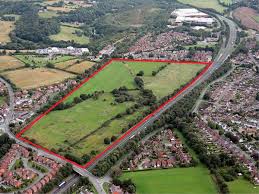
Using the Local Plan process to get planning permission

The planning system is complicated and the process for preparing a new Local Plan is no exception. However, the Local Plan can provide the opportunity to secure development on your land through an approach known as ‘land promotion’

The opportunity to promote your site through the Local Plan doesn’t come round very often. As Plans typically cover a 15 year period, they don’t need to be replaced more often than that. If you want to secure development on your site, it is therefore crucial that you take the opportunity when it arises.

Hestia Town Planning monitor each Councils Local Development Framework and know when it is the right time to put forward your land. 

Get in touch today to ask for a tailor-made proposal for your site – with absolutely no obligation.

What is a Local Plan?

Every council in England and Wales will have a Local Plan to guide development over a 10 to 15 year period.

The Plan consists of a number of policies which set out how much development is needed and where it should be located. When you submit a planning application, the council compare it against the policies in the Local Plan. If the application meets all those policy requirements it will normally be approved; if it doesn’t comply with policy then the application would usually be refused.

That Local Plan will identify specific sites for a particular use, such as new housing or employment. usually includes identifying specific sites for particular uses, such as new housing or employment development. It is this element of the Local Plan that we use to promote land for development.

How is a new Local Plan prepared?

As Local Plans only cover a set period of time, councils frequently replace them with new, more up-to-date Plans.

Government guidance sets out a strict process for preparing a new Local Plan. Essentially though, the process is quite straightforward and involves 5 key stages:

  1. Gather evidence on the challenges the council faces and the level of development needed.
  2. Consider the various ways in which those challenges could be addressed.
  3. Settle on a preferred solution and turn it into a draft Local Plan.
  4. Revise the Plan based on comments and suggestions from the public.
  5. Ask the Planning Inspectorate to confirm that the Plan has been prepared properly and can be used for deciding planning applications.

How we can help you use the Local Plan to your advantage

Each stage involves consulting local residents, land owners and developers for their views. This can include submitting your own evidence to the council.

If you would like a particular type of development on your site, this provides an opportunity to influence the policies in the new Plan. The aim is to make sure that those new policies allow your development to take place, even if it would be prevented by policies in the ‘old’ Plan.

Land promotion is a really powerful approach as it can work on sites of all types including Green Belt and even sites where planning permission has been refused in the past.

There are two key elements to land promotion:

  1. Submit evidence to the council showing why the development you are proposing is actually needed. For example, we might submit evidence to show that the council needs to deliver a significant number of new homes in a particular town.
  2. Demonstrate why your site is suitable for the type of development that is needed. This requires specialist evidence relating to traffic, ground conditions, ecology, landscape and heritage. It is important that evidence should show that your site is better than the alternatives.

If your land promotion is successful the new Plan will confirm that the development you have been promoting can take place.

Hestia Town Planning can help you secure planning permission on your land in this way. We specialise in promoting sites through the Local Plan process to secure permission for development.

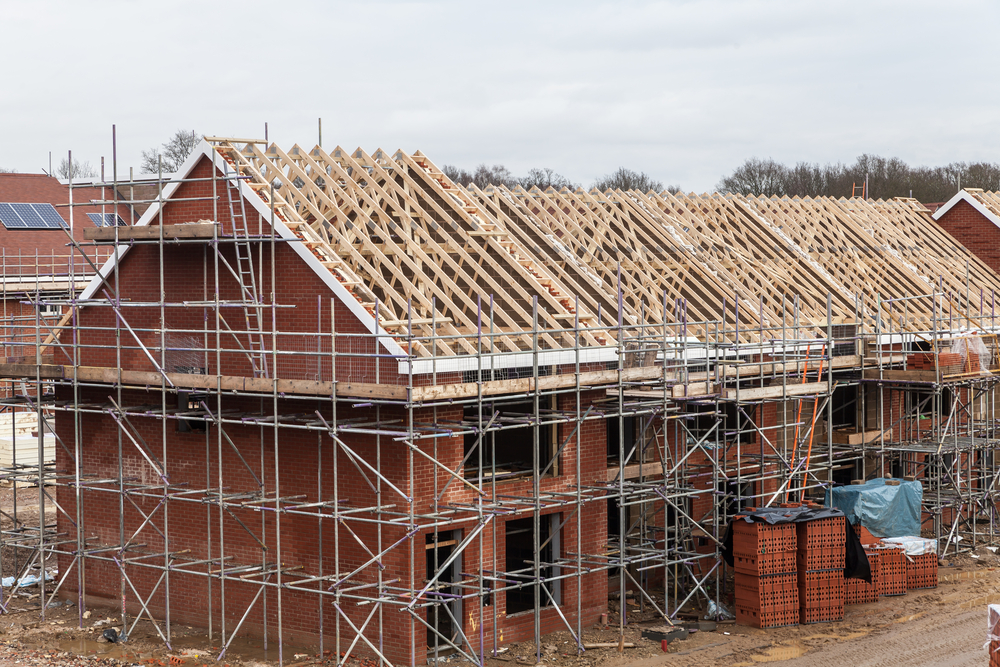
Will a new housing development decrease the value of my house?

Hestia Town Planning have helped many local residents, communities and parish councils respond to development proposals in their area. Quite often, the same fears reoccur, i.e. that the new housing development will worsen local amenities, reduce health and wellbeing and reduce the value of their home.

Whilst impacts on local amenities and health and wellbeing are considered during the planning process, the question of the impact on house prices is never directly addressed as house price impacts are not a material consideration in planning decisions. Therefore, when commenting on a planning proposals, we would generally avoid using decreasing house prices as an argument.

So does new housing development reduce the value of existing properties around that development? 

In 2015 SE London was asked by the NHBC Foundation and Barratt to address this question and the conclusions were quite interesting and may come as a relief to some.

The study, used statistical and qualitative evidence to look at the impact of eight average sized (60 – 280 units) new developments completed within the last five years on their immediate neighbourhoods and wider local areas. The evidence offered a clear answer to the research question: no, house prices do not always decline around new housing developments, at least not for a sustained period of time.

Sometimes there were short term price reductions during or immediately after the construction period. More generally prices in the wider area continued to follow existing upward trends. In the immediate locality—within a 0.3 mile radius of the new development—prices in some cases rose more quickly than in the wider area once the development was completed.

The research has been open to some criticism, for example the research did not look at very large scale developments which disrupt the area for long periods. However, these results are still important as they show that house prices do not always decline as a result of new development despite widely held fears that they do, which fuels much opposition to new house building.  

The full research can be found at the link below and may give some relief if there is a housing scheme proposed in your neighbourhood.

https://www.lse.ac.uk/business/consulting/reports/understanding-the-local-impact-of-new-residential-development

How we can help

If you would like to respond to a proposal in your area, whether it is for one dwelling or 1000, then we can write a professional letter on your behalf. The planning process is not the easiest process to navigate. We understand planning policy and will work with you to make sure your voice is heard and makes people listen and take note.

You may be able to demolish your commercial site or flats and replace with new residential dwellings or flats without planning permission

A new Permitted Development Right (PDR) was introduced in August 2020, which permits the demolition of certain commercial buildings and residential dwellings to create new dwellings. This is known as Class ZA and is another attempt by the Government to increase the supply of housing through the redevelopment of vacant land and underused buildings.

When you buy a site it can sometimes be tempting to demolish the building as soon as possible to speed things up. Our advice is to hold fire. Always speak to a specialise before you decide to demolish. You may be able to save a lot of time and money by utilising Class ZA.

What is Class ZA?

Class ZA allows for the demolition of either a single purpose built detached block of flats or a single detached building that is an office or light industrial that was existing on 12th March 2020. Class ZA allows for a replacement with either a single propose built block of new flats or a single purpose built house.

Class ZA also permits the replacement building to be up to two storeys higher than the existing building – potentially doubling the value of you scheme.

Criteria and Prior Approval

There is of course, a list of qualifying criteria which include; the requirement that the existing building needs to have been vacant for more than 6 months, the replacement building needs to be on the same footprint, and several others.

There are also prior approval matters that need to be addressed. These include the impact on:

  • highways
  • contamination
  • flooding risks
  • noise
  • natural light
  • design and external appearance of the new build

However, unlike Class Q (agricultural to residential) the new Class ZA includes consideration of:

  • ‘impact on business’
  • impact on heritage and archaeology
  • landscaping

There is also a requirement to provide details of the method of demolition and then, following approval, there is a need to provide details of the construction management of the development including some listed elements.

This PDR excludes sites in Areas or Outstanding Natural Beauty, Conservation Areas, or Listed Buildings.

Contact us

For specialist advice on whether you can utilise Class ZA contact a member of our team on 07463136687 or email hestia.planning@outlook.com

Can I extend upwards on my block of flats?

The residential sector has been struggling for a while.  Supply and demand for land and living is becoming more and more challenging meaning that the Government are coming up with new ways in an attempt to resolve the problem.  

On the 1st August 2020, a new Permitted Development Right (PDR) came into effect which attempted to relieve the housing demand pressure. This PDR is know as ‘airspace rights’ and falls under Part 20, Class A of The Town and Country Planning (Permitted Development and Miscellaneous Amendments) (England) (Coronavirus) Regulations 2020.

What are Class A ‘airspace rights’?

Class A airspace rights allow the construction of up to two additional storeys of flats immediately above the existing topmost residential storey on a building which is an existing purpose-built, detached block of flats. This is subject to a prior approval process, details of which need to comply with the regulations.

What is not permitted?

As with most PDR’s, such developments remain, subject to a number of approvals and there are exceptions.

1) The existing building cannot be in residential use as a result of a previous Permitted Development change of use.

2) The existing building cannot be less than 3-storeys in height.

3) The building is exempt if constructed before 1st July 1948 or after 5th March 2018.

4) Floor to ceiling heights of additional storeys cannot exceed 3 metres or the height of an existing storey.

5) The extended building cannot exceed 30 metres in height.

6) The overall height of the roof of the extended building cannot be greater than 7 metres higher than the highest part of the existing roof (not including existing plant).

7) Works cannot take place outside the existing curtilage of the building.

8) The building cannot lies within a Conservation Area, AONB, a National Park, the Broads, a site of special scientific interest, a listed building or land within its curtilage, a safety hazard area, a military explosives area, or land within 3km of the perimeter of an aerodrome.

Contact us

We’d urge any developer or landlord to speak to a specialist before investing too heavily – airspace developments are complex when it comes to legal issues and there are many factors to consider.

FIND OUT IF YOUR BUILDING MAY BE SUITABLE FOR AIRSPACE DEVELOPMENT BY CONTACTING OUR SPECIALIST TEAM ON 07463136687

Anyone can apply for a Tree Preservation Order on any tree or group of trees.

Trees are important for maintaining the look and feel of an area. They offer many benefits (mainly keeping us alive!) and encourage biodiversity and help to counter the harmful effects of pollution. However, there are many trees that are not given the protection of a Tree Preservation Order (TPO). This means, that mature and important trees can be felled and there is little that the local authority can do about it.

This week, Hestia Town Planning have been helping local residents apply to protect some important trees within their village. Over the last years a number of trees within the village had been felled, changing the streetscape significantly for the worse. The villagers were worried that to lose more trees would irrevocably damage the character of this part of the village, not to mention the loss of wildlife habitat.

How to obtain a TPO

The good news is that anyone can request a TPO and it doesn’t need to be on your land. If you speak to your local authority then they should be able to point you in the direction of your tree and conservation department. They can then determine whether the tree(s) requested have the attributes for a TPO. These attributes will be that they are in a good physical condition and have public amenity value. You will have to describe what public amenity value they give, or will be lost if they are removed, and locate the trees on a map.

Examples of amenity value are given below:

Amenity Value

TPOs should be used to protect selected trees and woodlands if their removal would have a significant impact on the local environment and its enjoyment by the public. Suggested amenity value assessment criteria for TPOs:

  1. Visibility: trees need to be seen clearly from a public place, such as a road or footpath for the impact on the local environment to be assessed as significant.
  2. Individual impact: the mere fact that a tree is publicly visible will not itself be sufficient to warrant a TPO. You should also assess the tree’s particular importance now or in the future by reference to its size and form, special factors such as its rarity or scarcity, its intrinsic beauty, historic value or interest within a local area or contribution to the landscape or to the character or appearance of a conservation area or as a screen eg to an eyesore or future development. In relation to a group of trees or woodland, an assessment should be made of its collective impact; Other factors, such as importance as a wildlife habitat, may be taken into account but alone would not be sufficient to warrant a TPO.
  3. Wider impact: the significance of the trees in their local surroundings should also be assessed, taking into account how suitable they are to their particular setting (including in a built up area), as well as the presence of other trees in the vicinity.

After giving amenity value reasons for individual or groups of trees, they need to be clearly identified on a map – ideally on a 1:1250 OS map and relative to features such as boundaries and giving numbers and species of each or group of trees. Trees may be specified:

  1. Individually (each tree – T1, T2 etc – circled in black on the map)
  2. By reference to an area (boundary of each area – A1, A2 etc – indicated on the map by a dotted black line)
  3. In groups (each group – G1, G2 etc – shown within a broken black line) – used for trees whose overall impact and quality as a group merit protection.
  4. As woodlands (the boundary of each woodland – W1, W2 – etc indicated by a continuous black line).

Any combination of these four categories may be used in a single TPO.

For scattered trees over an area, an area TPO can be made (e.g. ‘the trees of whatever species within the area marked A1 on the map’ – generally only used as temporary measure in emergencies).

Hedgerow Protection

A TPO may be made to protect trees in hedges or an old hedge which has become a line of trees of a reasonable height and is not subject to hedgerow management.

The Hedgerows Regulations 1997 protects hedgerows in the countryside on agricultural land. If the hedge, or part of it that people want to remove is over 30 years old and more than 20 metres in length, it is defined as a ‘protected hedgerow’ and the local authority must be contacted before any action can be taken.

If a hedge forms a boundary to a residential property then people do not need the local authorities permission to remove a hedge – unless it is protected by a planning condition or a legal covenant on the house deeds.

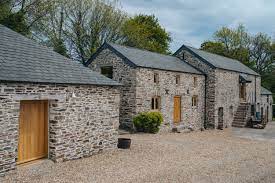
Do I need planning permission for a barn conversion?

In 2014, permitted development rights were extended to allow agricultural buildings (e.g. barns) to be converted into homes (Class Q). However, like many other permitted development rights, there are certain rules and regulations that you must adhere to before you get given the green light by the local planning authority.

If you are thinking of converting your barn, or considering purchasing a plot, then speak to us first. We are always happy to help and guide you in the right direction.

Prior Notification

Even though barn conversions are classed as permitted development, you will still need to give the local authority ‘prior notification’ to seek approval before you start work. You can read our dedication page for more information on prior notification, however in brief, it is like a fast-track planning application. The council has the right to refuse the proposals if certain criteria are not met and can impose conditions on the development.

There are some hard and fast rules when it comes to understanding if your barn conversion won’t meet the requirements of Class Q and will therefore need planning permission. These include:

  • if it is in an Area of Outstanding Natural Beauty (AONB)
  • if it is a listed building
  • if it isn’t on an agricultural unit (for example, if the barn is in a garden or paddock rather than on a farm).

Are your works for a conversion or re-build?

Class Q is a controversial piece of legislation and issues may occur if the local planning authority classify the development as a re-build – even if much of the existing building remains. If the local planning authority believe your project falls under a ‘re-build’, then they will request a full planning application.

Hestia Town Planning have worked on many cases where we have successfully argued that a project constitutes a conversion, thus avoiding the need to submit a full planning application.

Full Planning or Prior-Notification?

It is worth noting there there are both pros and cons to applying for full planning or going down the prior notification route. When you contact us, we will assess your site and pull together a strategy to advise you on the best route to take.