Site Appraisals and Promotion

If you own or are thinking of buying a site but are unsure of what to do with it, then Hestia Town Planning can help.

At Hestia Town Planning, our skilled team will help to create and add value through the identification, appraisal and promotion of your property or land for development.

Our consultants have a finger on the pulse of the market to ensure you get the most from your site.
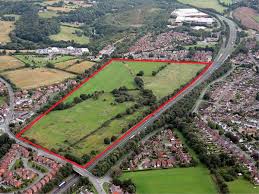
A town planning consultancy should be your first port of call.

Allocating or safeguarding land for a particular land use greatly increases the chance of gaining planning permission and Hestia Town Planning has a wealth of experience of such practices.

However, promoting land for development is rarely straightforward so obtaining the advice of a planning consultancy is strongly recommended.

How we can help

We will firstly discuss a strategy to navigate towards securing planning permission.This can vary from submitting a planning application immediately to pushing your site through planning policy, local plans and neighbourhood plans.

If your site isn’t ready for planning submission due to identified risks, then Hestia Town Planning will positively influence local plans to secure the development opportunities.

If you own land and would like to develop it then we can help. Hestia Town Planning have extensive knowledge surrounding land policies, including insight into complex planning procedures and terminology.

Crucially, we monitor each Councils Local Development Framework and know when it is the right time to put forward your land. This all helps to identify the planning merits of your particular land and thus put your case in a professional and persuasive way.

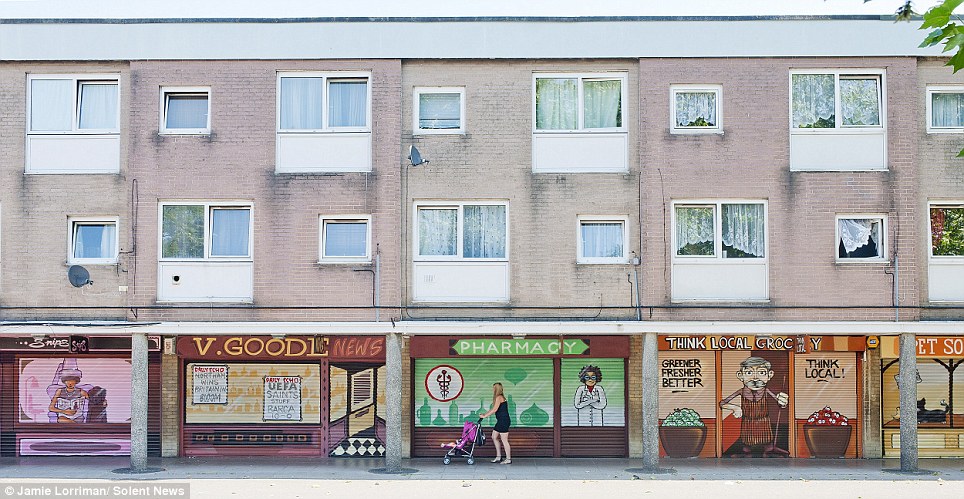
The planning system is always changing, meaning you could be sitting on a fortune.

Class MA – Change of Use from Use Class E to Residential

In 1 August 2021 new permitted development rights (Class MA) came into effect, granting deemed planning permission for a change of use from commercial to residential. These permitted development rights replaced existing retail, warehouse and office to residential rights with rights applying to all of the relatively recent Use Class E in which those uses now sit.

This means, that subject to certain criteria (discussed below), you can bypass the full planning application route and follow a far easier and cheaper planning route known as prior-notification.

What Falls under Use Class E

If your building falls under any of the below descriptions, then it is worth investigating whether you can change its use to residential:

  • E(a) Display or retail sale of goods, other than hot food
  • E(b) Sale of food and drink for consumption (mostly) on the premises
  • E(c) Provision of:
    • E(c)(i) Financial services,
    • E(c)(ii) Professional services (other than health or medical services), or
    • E(c)(iii) Other appropriate services in a commercial, business or service locality
  • E(d) Indoor sport, recreation or fitness (not involving motorised vehicles or firearms or use as a swimming pool or skating rink,)
  • E(e) Provision of medical or health services (except the use of premises attached to the residence of the consultant or practitioner)
  • E(f) Creche, day nursery or day centre (not including a residential use)
  • E(g) Uses which can be carried out in a residential area without detriment to its amenity:
    • E(g)(i) Offices to carry out any operational or administrative functions,
    • E(g)(ii) Research and development of products or processes
    • E(g)(iii) Industrial processes

Class MA permitted development is subject to the following qualifications:

  • an upper size limit of 1,500 square metres of floor space changing use;
  • applicable only to buildings that have been in Commercial, Business and Service (Use Class E) uses for two years (including time in former uses now within that class);
  • applicable only to buildings that have been vacant for at least three continuous months;
  • applicable in conservation areas, but not in other Article 2 (3) land such as National Parks and Areas of Outstanding Natural Beauty;
  • subject to prior approval by the local planning authority on specific planning matters (more on this below);
  • attract a fee of £100 per dwellinghouse.

There are prior approval rules limiting those areas where a council can object to the change on.

For Class MA development these grounds are:

  • the transport impacts of the development, particularly to ensure safe site access;
  • any environmental contamination risk;
  • any flooding risks;
  • the impacts of noise from commercial premises on the intended occupiers of the development;
  • the provision of adequate natural light in all habitable rooms; and
  • the impact on intended occupiers of the development of the introduction of residential use in an area the authority considers to be important for general or heavy industry, waste management, storage and distribution, or a mix of such uses.

In addition to the above requirements, the following three matters also apply although only in more limited circumstances:

  1. the impact on intended occupiers of the development of the introduction of residential use in an area the local planning authority considers to be important for general or heavy industry, waste management, storage and distribution, or a mix of such uses;
  2. Where the building is located in a conservation area, and the development involves a change of use of the whole or part of the ground floor, the impact of that change of use on the character or sustainability of the conservation area; and
  3. Where the development involves the loss of services provided by a registered nursery, or health centre the impact on the local provision of the type of services lost.

Change of Use to Residential without Planning Permission

If your site meets all of the above requirements then you will not need to follow the full planning procedure. However, deciding whether your building ticks all of the requirements can be a complicated and confusing process and the advice of a planning consultant is always recommended.

Our Service

For £450 our planning specialists can conduct a full site appraisal to ensure your site meets all of the above requirements and give you confidence that your site falls under Permitted Development Rights. We offer an additional service where we can prepare all material and submit your application.

Please contact us to talk about how we can provide an assessment to determine whether your site meets these requirements.

Town Planning Services for Farmers

Using the Planning System to help you get the most from your land. 

A tailored service to suit every need

The most common question We get asked is “what can I do on my land?”. Like most planning matters, there is never a simple answer to this as there is no one size fits all approach. However, Our tailored service will ensure that you are given all options and know any risks  from the start.

Free, no obligation advice

When you approach us, we always start by discussing your goals and requirements for your land. Quite often, the landowner doesn’t know what to do and is simply looking for ideas and advice.  

Whatever your reason for coming to us – we can always help.

What can I do with my land?

The reasons we are contacted by farmers vary considerably. For example, some farmers may want to install a wind turbine; some may want to put forward surplus land for housing; and others simply want to know whether they can build an agricultural building without planning permission or change the use of a building. 

No meeting is ever the same, but our goal always is – to use the Planning System to help you get the most from your land. 

Some projects fall within your Permitted Development Rights and you will just need to formally notify the Local Planning Authority. Other projects may fall outside your Permitted Development Rights and will require Planning Permission. See the next page for more information on Permitted Development.

Once we have an understanding of your goals, for a fee, we can then conduct an appraisal and let you know in simple terms, what you can do and the best way to get your plans off the ground. 

Permitted Development

Do I need Planning Permission?

The permitted development procedures remain complicated processes and the assistance of a planning consultant is advised. 

Permitted development rights (PDRs) are useful procedures that make certain types of development quicker, easier and cheaper. You won’t need to go through the full planning permission process, however you will still need to submit an application for prior approval 


What types of agricultural PDRs are there?
Class A

Class A allows you to erect, extend or alter a building, including excavation or engineering operations, all of which must be reasonably necessary for the purposes of agriculture within the unit.

There must be no development:

  • On a separate parcel of land that is less than 1ha and which is part of the agricultural unit
  • Where dwellings are involved
  • Where something is not for agricultural use
  • Where the ground area of the building or development is more than 1,000sq m (except for fencing)
  • Where any part of the development is within 25m of a metalled part of a trunk road or classified road
  • Of a building (or involving work to a building) intended for or used by livestock, slurry or sewage sludge housing and within 400m of the curtilage of a dwelling. The curtilage usually means the physical boundary of the land surrounding a dwelling. If the works are within 400m of buildings within an agricultural unit (or a dwelling or other building on another agricultural unit), they are excluded from this restriction.
  • Anything involving excavations or engineering operations connected with fish farming on certain protected land types (for example, National Parks).

Height restrictions also apply where the work is within 3km of the perimeter of an aerodrome.

There are other conditions, too, mainly concerning removal of minerals from the site and waste materials being brought on to a site.

Class O

Farmers with buildings used as offices can change them to houses under Class O.

This can be carried out anywhere as long as it is not: a listed building, safety hazard zone, military explosives storage area, an ancient monument, or where the local authority has obtained an article four preventing this type of conversion.

It must have been an office on or before 29 March 2013.

Class Q

Class Q allows for the change of use of an agricultural building to a house. In 2018, the regulations were amended to allow for up to five dwellings and up to 865sq m floor space to be converted.

The building must have been in agricultural use on 20 March 2013 and the development cannot extend beyond its existing external dimensions.

Class Q cannot be used for a listed building or one within a conservation area, National Park, Area of Outstanding Natural Beauty, World Heritage Site or a site of special scientific interest.

Class R

Class R permits the change of use of agricultural buildings to a flexible commercial use of a retail unit, restaurant or café, office, commercial storage/distribution use, hotel, or a range of leisure uses, such as a concert hall or gymnasium.

On any one farm, the conversion should not exceed 500sq m.

Class R applies to buildings in agricultural use on 3 July 2012 that are not listed or part of a scheduled ancient monument, safety hazard area or military explosives storage area.

Class S

Class S permits the change of use of agricultural buildings to a state-funded school or registered nursery.

On any one farm, the conversion should not exceed 500sq m. Class S applies to buildings in agricultural use on 20 March 2013 that are not listed or part of a scheduled ancient monument, safety hazard area, military explosives storage area or site of special scientific interest.

Development is not permitted by Class S if the site is occupied under an agricultural tenancy, unless the express consent of both the landlord and the tenant has been obtained.

Contact Hestia Town Planning for a free, no obligation talk.