Getting planning permission for an extension is not as complicated and daunting as it might first appear. With Permitted Development Rights (PDR’s), there’s a lot of improvement and development work you can do to your home without the need for approval from the local planning authority.
This blog explains the law for houses around planning permission for an extension. If you are seeking information on planning permission for an extension to a flat, maisonette, listed building or a type of building that isn’t a house, it’s important to take legal advice as some of the below may not apply.
Do I need planning permission for an extension?
The short answer is that you DON’T need planning permission for an extension if you build within your permitted development rights. This is however subject to certain limits and criteria.
Most of the restrictions that don’t fall under permitted development are for work to the front of a house, next to a road or near a boundary.
What are the criteria which decide whether I need planning permission for an extension?
Under PD rights certain works can be carried out providing you meet certain criteria, such as:
- You can extend a detached property by 8m to the rear if it’s a single-storey extension (6m for a semi or terraced house), or by 3m if it’s double
- A single-storey extension can’t be higher than 4m on the ridge and the eaves, and ridge heights of any extension can’t be higher than the existing property
- Two-storey extensions must not be closer than 7m to the rear boundary
- Side extensions can only be single storey with a maximum height of 4m and a width no more than half of the original building
- Any new extension must be built in the same or similar material to the existing dwelling
- Extensions must not go forward of the building line of the original dwelling
- In designated areas (such as areas of outstanding natural beauty, conservation areas, etc), side extensions require planning permission and all rear extensions must be single storey
- An extension must not result in more than half the garden being covered
From 31st August 2020, the rules changed so that two-storey extensions on detached, semi-detached and terraced houses will be fast-tracked as long as they get prior approval. This means the local authority have to be notified of the details before the project starts and it’s a much more involved process with the Local Authority.
There are some restrictions an extension has to adhere to:
- Once works have been completed, the building must not be more than 18m high (excluding plants)
- The floor-to-ceiling height of any additional storey must not be more than 3m in height or higher than the floor-to-ceiling height of any of the existing storeys
- The overall height of the extension, including the roof, must not be more than 7m high.
If you’re planning on building a large extension then it will, more than likely, need planning permission and you will need to submit an application.
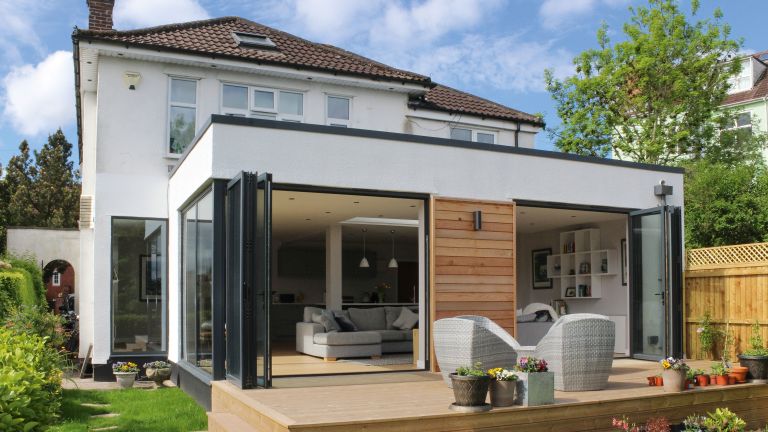
What is the neighbour consultation scheme?
If building a single-storey extension of more than four metres up to eight metres from the back of your house (for a detached house, six metres for semi-detached) you have a duty to inform your neighbour. This is known as the neighbour consultation scheme and is halfway between permitted rights and planning permission. The purpose of the neighbour consultation scheme is a way to keep control of the bigger developments and avoid neighbour disputes.
Instead of speaking to your neighbour directly, you must contact the local planning office and they consult with your neighbours about your development. If your neighbour objects with a fair reason, the planning office can stop your permitted development.
Note, this is only for large extensions over four metres and you can still build up to four metres without having to go through this process.
If you’re thinking of adding roof lights or adding new windows to your extension then you may also need planning permission.
Other restrictions you need to check before building an extension
The Original House rule
Permitted development guidelines for adding an extension to your house refer to the ‘original house’. This means the property as it stood on 1 July 1948 or on the date it was built if after. If an extension has been added to the original house then you have to factor this in to any development you can do under permitted development rights.
Listed buildings
Subject to stricter planning rules a listed building needs listed building consent from your local planning office and the permitted development rights might not apply.
Designated land
Conservation Areas, National Parks, Areas of Outstanding Natural Beauty and World Heritage Sites. As with listed building properties built in designated areas are subject to tighter control and will need approval from the relevant authority.
Article 4 Direction
A local council has the right to override permitted development rights if an Article 4 Direction is in place.
Restrictive covenant
A property can have a covenant attached to it by a previous owner as a condition of sale. This can be a restriction of any development of the property or building in the grounds of the property.
 Hestia Town Planning