Adding an extension to your house can add value and create much needed space. In most cases, having an extension or addition to the house is classed as a “permitted development,” so it wouldn’t require planning permission (a prior-notification form may be required).
Read on to see when you may need planning permission. While the below list is not exhaustive, you should always seek the guidance of a planning consultant or planning officer in your local authority.
When is Planning Permission required?
Your project will not fall under permitted development and will require planning consent if the following applies:
- The size of the extension is more than half the area of land around the “original house”.
- The extension is taller than the tallest or highest part of the roof.
- If it is a single-storey rear extension, it extends beyond the rear wall of the house by more than three metres in a semi-detached house, or by four metres in a detached house.
- The maximum height of a single-storey rear extension will be more than four metres.
- If an extension of more than one storey extends beyond the rear wall of the house by over three metres.
- The maximum eaves and ridge height of the extension will be higher than the existing house.
- If you want to use different materials, i.e. looks different in appearance to the existing house.
How we can help
If you are looking to extend your property then it is vital to consult the experts to assess whether you need planning permission.
Contact us and we can help with all the matters for you extension
How far can I extend without Planning Permission?
You can build an extension without planning permission up to six metres (or eight metres if your house is detached). But it is worth considering the following before extending the property:
Property type:
If you live in a flat, maisonette, or another type of building, you do not have permitted development rights. This means you cannot build an extension without full planning permission. And if your property has undergone a change of use or was converted into a house, permitted development rights may not be allowed.
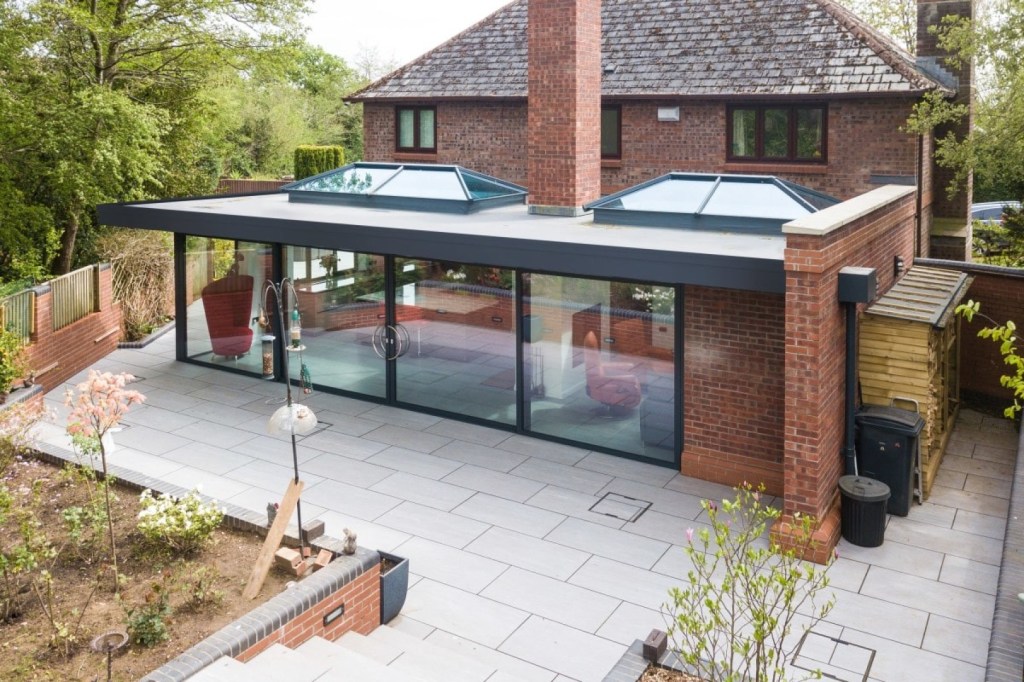
Has the property already been extended?
If the property has been extended after 1948 then you may need planning permission or your permitted development allowance will have been reduced.
Is your property Listed or on Designated Land?
If it is in a ‘protected’ area, such as a conservation area, national park, or areas of outstanding natural beauty, the permitted development rights might even have been removed. But even if the rights have been restricted rather than removed, this means you cannot build more than one storey, build a side extension, or clad the exterior.
 Hestia Town Planning